
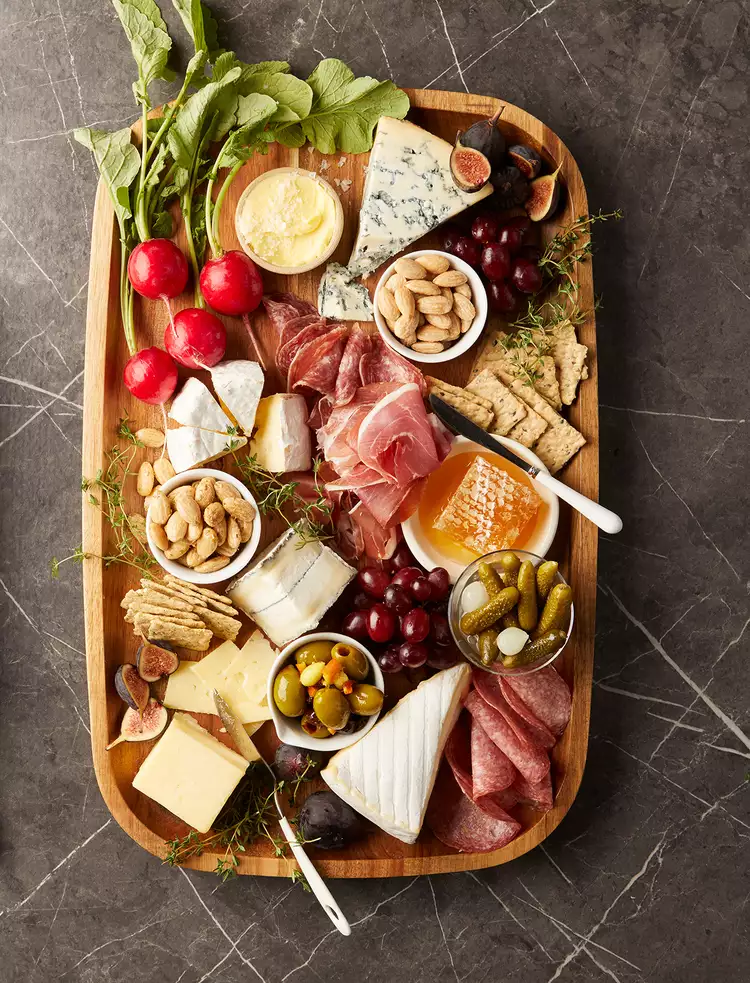
While charcuterie (pronounced shar-COO-tur-ree) technically refers only to a selection of cold cooked meats, it's usually inclusive of a broad supporting cast of cheeses, spreads, crackers, nuts, and produce.
The best aspect of charcuterie boards is the flexibility they afford: Scale portions up or down depending on the number of guests, adjust ingredients for dietary needs and preferences, or shop for foods within a specific color palette or region. To get you started, we show you how to make a simple meat and cheese board from start to finish.
What Is a Charcuterie Board?
“Charcuterie” is French with origins in the 15th century, and it refers to cured meats. Nowadays, charcuterie boards can include many things other than meats, including pickles, fruits, salad, and even cookies and candies. Make them for parties, date nights, or Halloween gatherings. There’s no limit to when and how to make this ultimate party tray.
What Are the Elements of a Charcuterie Board?
The Platter
First, choose a board, tray, or platter to be your foundation. Wood and marble are popular charcuterie board material choices because they are sturdy and beautiful. The shape is simply a matter of preference, though you should take the elements of your board into account when making your selections.
For example, a rectangular board may better accommodate long, leafy vegetable stems or cheese wedges than a square-shape one. We designed this rectangular 20x12-inch board to feed about 10 people. Bear in mind: The larger the board, the more money you'll spend to fill it up. If you want to keep your budget in check, fill large boards out with more produce or opt for a smaller one.
The Dishes
Dishes create structure on the board. Use little bowls and cups (we like these Better Homes & Gardens Small Coupe Ramekin Bowls, Set of 8 for $16, Walmart) to anchor the arrangement and help contain loose items like dips, nuts, and olives. Raid your kitchen cabinets for salt cellars, small candy dishes, and ramekins. What you have on hand is perfect—they don't need to match!
The Cheeses
If your budget and location allow it, go to a local cheese shop for unique, high-quality cheeses. As a rule of thumb, include three to five cheeses in these basic categories: a hard cheese, a soft cheese, and a blue cheese. Contrasting flavors and textures diversify the board and give guests a broader range of options to sample. If you aren't sure what to buy, ask the store for pairing recommendations.
The Meats
Include a few varieties of thinly sliced cured meats. Lay them flat or arrange them in loose rolls so they're easy for guests to pick up and nibble on. You can also include harder meats that guests can cut themselves, like smoked sausages and salamis, and a spreadable meat like pâté (chicken or duck liver). Some popular charcuterie meats include guanciale, pancetta, hard salami, prosciutto, and mortadella.
The Crackers
Crackers, breadsticks, breads. You'll want to include a few starchy sidekicks, especially if your board includes soft, spreadable cheeses and jams. There's no hard-and-fast rule here, though we recommend offering two types of crackers or breads with different flavor profiles. If someone on your guest list has gluten sensitivity, consider subbing in a nut-based cracker option.
The Produce
Fruits and veggies add color and freshness to a charcuterie or meat and cheese board. They're also a tasty contrast to rich, salty meats and cheeses. When planning which items to include, consider foods that can be eaten whole or cut into slices. Buy in-season produce for the best flavors (and to trim down your grocery bill).
Building a Charcuterie Board: Where Do I Start?
Though there are many easy charcuterie board ideas out there, the process is somewhat formulaic. Start by adding structure with little dishes, then place your ingredients on the board starting with the largest elements like the cheeses and meats, followed by smaller items like crackers and fresh produce.
Step One: Add Structure
Fill small vessels with dips, spreads, and items that can be piled onto the board. Try honey, mustard, cornichons, blue cheese-stuffed olives, or a mixed selection of salted nuts.
Step Two: Add the Cheeses and Meats
First, place the cheeses. Arrange them evenly around the board and allow space for slicing and scooping. We used two kinds of Brie (a robust, creamy Brie and a mild Brie), blue cheese, an aged cheddar, and goat cheese on this board.
Next, add the meats. We placed the prosciutto, Italian salami, and American salami in little piles next to the cheeses. It's OK if items on the board touch; they're meant to be enjoyed together.
Step Three: Add Crackers
Slip two or three small stacks of sliced bread or crackers among the bowls, meats, and cheeses. Let them topple over and get a bit messy—it's part of the board's beauty. We used two kinds of crackers—Asiago cheese and flax seed—to complement the various flavors on the board.
Step Four: Add Fruits, Veggies, and Herbs
This last step is the icing on the cake. Fill in any gaps on the board with fruits, vegetables, and sprigs of herbs. We used whole radishes, sliced figs, red grapes, and thyme. If you don't have fresh items available to you, sub in dried fruits like apricots, cherries, and plums for something sweet and chewy. When your board is finished, set it out with a few cheese knives so guests can help themselves after they marvel at your masterpiece. Enjoy!
Most charcuterie meats and cheeses are tastiest when served at room temperature. Perishable items shouldn't sit out for more than two hours. Consider keeping a small selection of "refill" items, like sliced meats and cheeses, in the refrigerator so they're ready to go when the board needs restocking.
How to Build on a Budget
Meats, cheeses, produce, and extras can really add up, but building a charcuterie board doesn’t have to be an occasional splurge. Before heading to the grocery store, shop for ingredients in your pantry. You may find a jar of olives or jam, crackers, dried fruits, nuts, and more that will be perfect for a board.
From there, look in the store for ingredients that will complement what you have at home. Buy specific amounts of meats and cheeses from the deli instead of packages that may have more than what you need. Supplement the board with tasty yet inexpensive ingredients, like carrots, Cheddar cheese, baguette slices, cucumbers, or pretzels.
:max_bytes(150000):strip_icc():format(webp)/amy-palanjian-cb5203be3b8542398f2e02de508c9fe8.jpg)